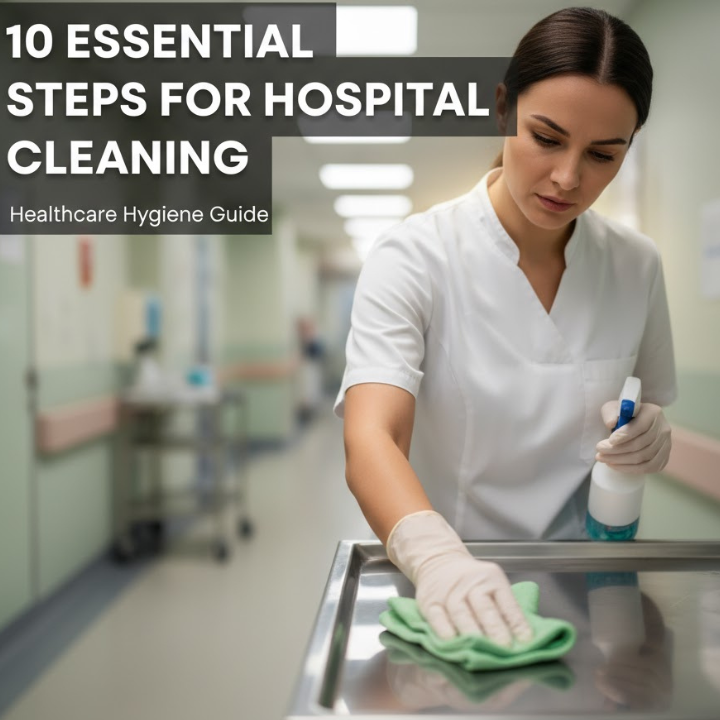
Healthcare-associated infections (HAIs) are an overwhelming problem across the globe, and the Centers for Disease Control and Prevention (CDC) states that every 31st patient is likely to be infected during their stay in a hospital. The lapses in the practices of cleaning and hygiene in the hospitals are often directly related to these infections. Since patients within medical settings are susceptible as a result of compromised immunity or inpatient treatments, ensuring excellent sanitation of hospitals is not only desirable but essential for the safety of patients and the reduction of infections.
Healthcare cleaning procedures are much more complicated than regular commercial cleaning processes since they require the removal of various pathogens such as bacteria, viruses, and fungi in very sensitive facilities, including operating rooms, ICUs and isolation wards. The emergence of drug-resistant organisms makes the need to adhere to stringent hospital sanitization protocols that are unique to medical institutions.
This guide presents 10 key steps that are the building blocks of full hospital cleaning. It is designed primarily for cleaners, facility managers, and healthcare administrators who want to strengthen their practice on the basis of evidence-based clinical cleaning standards.
Why Hospital Cleaning Standards Matter
The importance of following the clinical cleaning standards in halls cannot be overemphasized in hospitals. Research indicates that hospital sanitization protocols can lead to a reduction in HAIs by a minimum of 30%. These kinds of infections result in prolonged hospitalization, high medical expenses and most of all patient misery or even death. In addition to the health implications, inappropriate cleaning endangers the image of a hospital, which may drive away the patients and lead to loss of revenues.
To safeguard patients and guarantee their safety, legal and regulatory bodies make specific, strict demands; such as not being able to met, it may lead to punishment or loss of accreditation. They instill a lot of capital in training and quality assurance even in healthcare facilities to ensure that hygiene standards are outstanding, as it depends on the community and the blocs to show that they are capable of keeping their sanitation above board.
Understanding Hospital Cleaning Standards and Regulations
Key Regulatory Bodies and Their Requirements
Healthcare environments are regulated by a number of bodies that ensure their cleanliness. The CDC has comprehensive guidelines on the standards and regulations of hospital cleaning standards and regulations, including the best practices of using disinfectants and the frequency of cleaning. OSHA implements occupational safety regulations that impact the workers whose duties involve healthcare cleaning operations, including chemical safety and wearing PPE. The accreditation of the Joint Commission of hospitals demands that they adhere to high standards of sanitation to guarantee safety and quality of care provided to patients. Moreover, the state and local health departments present regulations based on the regional systems of healthcare and the risks of infectious diseases.
Clinical Cleaning Standards You Must Follow
There is a need to comply with clinical standards such as those provided by the Association of Perioperative Registered Nurses (AORN), especially in the surgical setting. The AORN details the cleaning and sterilization measures that are important in the prevention of surgical site infection. EPA makes it mandatory that disinfectants used in hospitals should be registered and tested to have the ability to kill certain pathogens. The use of these disinfectants requires a proper dilution and contact period. Compliance monitoring and documentation are essential for accountability and audit preparedness. These integrated models will be used to make sure that healthcare hygiene practices are in accordance with scientifically valid standards.
Essential Hospital Cleaning Training Requirements
The cleaning personnel must be provided with extensive training that will be specific to the requirements of medical facility cleaning. However, hospital cleaning cannot just be done by any general cleaning worker as it involves knowledge about complicated protocols, chemical risks, and the dangers of infections that are specific to the healthcare setting. Main elements of training are proper application of PPE, cleaning procedures in accordance with the requirements of clinical cleaning standards, and work with chemicals to avoid contamination or harm.
Training activities cannot be considered a one-time process; continuous learning and periodic retraining should be provided in order to keep abreast with the changing pathogens, new technologies and new regulations. The facilities should have a record of training, and should check the competency frequently which will create a culture of quality and alertness.
The 10 Essential Steps for Complete Hospital Cleaning
Step 1: Conduct Pre-Cleaning Risk Assessment
Conduct a good risk assessment before embarking on any cleaning process. Determine high-risk areas like isolation rooms, ICU, and OR that have high infection risks since the patients are vulnerable, also because of invasive procedures. Evaluate patient status in order to know how to wear PPE and safety precautions. Review the biohazard materials that need to be handled in a special manner. It is a preventative assessment that is in line with infection control, cleaning and promotes staff and patient safety.
Step 2: Gather Appropriate Cleaning Supplies and Equipment
Apply EPA-registered hospital-grade disinfectants, which are proven to be effective and are accepted to be use clinically. Use colored cleaning equipment to reduce cross-contamination of various areas of the hospital. PPE (gloves, gowns, masks and eye protection) should be accessible at all times and should always be put on. Microfiber cloths and mops increase the elimination of contaminants. Make cleaning solutions as per the manufacturer’s instructions, ensuring that it is well diluted to ensure maximum disinfection without damaging the material.
Step 3: Follow Proper Hand Hygiene Protocols
The foundation of prevention of the transmission of pathogens in the course of cleaning is hand hygiene. Wash hands before, during and after cleaning activities in proper hand washing methods or using alcohol based hand sanitizers. Comprehensive washing prevents the transmission of microbes, which strengthens the healthcare hygiene practices of the medical community to defend against infection of the personnel and consumers.
Step 4: Use Systematic Room Cleaning Methods
Use a systematic cleaning plan: Clean the high areas first and go downward, clean the cleanest area before progressing to dirtier ones and clean the area at the back of the room towards the exit. This is a systematic process that would not recontaminate already cleaned spots. High-touch surfaces such as light switches and call buttons, should not be left without cleaning because they contain high frequencies of pathogen transfer. Regularity in cleaning rooms is considered critical in keeping up with the cleaning of hospitals.
Step 5: Focus on High-Touch Surface Disinfection
Clean and sanitize high-touch surfaces, including bed rails, door handles, and controls on medical equipment. Adhere to the specified disinfectant contact times to be effective. Increase cleaning levels during outbreaks or in acute care areas. Record thoroughly these activities to show that they comply with the standards of hospital disinfection.
Step 6: Implement Terminal Cleaning Protocols
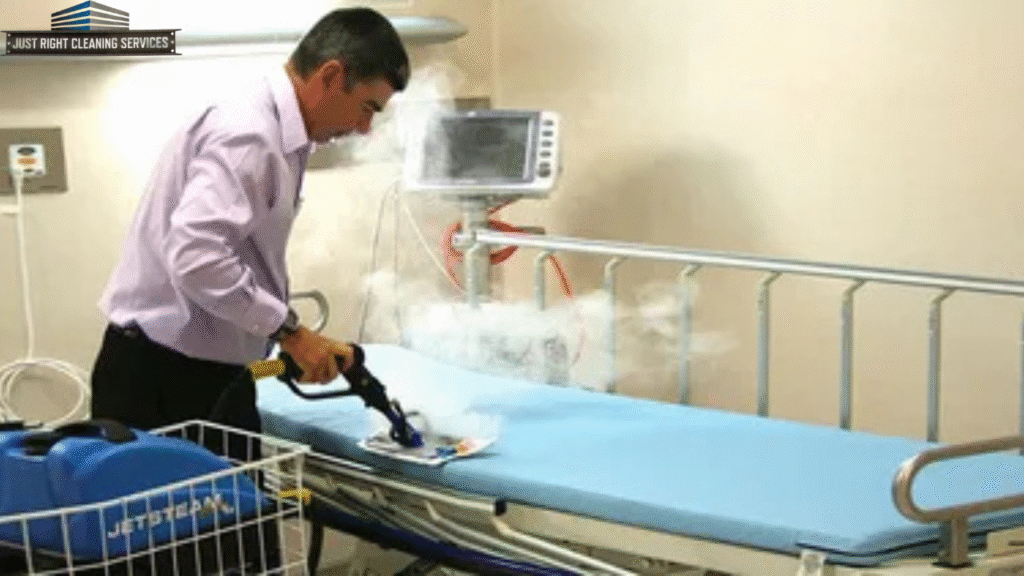
Terminal cleaning refers to a thorough, intensive cleaning done after the patient has taken their leave, to make the rooms ready to accommodate the next patient. It is stricter than normal cleaning, and it frequently involves some high-tech disinfection methods, such as UV-C light or electronic sprayers. Isolation rooms should have better measures to remove the stubborn pathogens. Hospital sanitization protocols are a vital component of hospital cleaning.
Step 7: Apply Specialized Operating Room Sterilization
The surgical rooms should be cleaned carefully because of the possibility of surgical site infection. Between cases, turnover cleaning is done to remove contaminants and then terminal sterilization is done at the end of the day. This is a process that includes sterilization as opposed to disinfection and may involve autoclaving or other means of neutralizing all microorganisms. Maintaining sterile environments is a guarantee of patient outcomes, as well as clinical cleaning standards.
Step 8: Properly Handle and Dispose of Waste
Separate waste sources of the regular, infectious and biohazard materials. Precautionary measures to dispose of sharps. Sharps must be kept in puncture-resistant containers and disposed of strictly. Adhere to the rules of transportation and treatment of medical waste. Effective management of waste safeguards personnel and avoids contamination of the environment, which is also part of responsible healthcare cleaning procedures.
Step 9: Document Cleaning Activities and Compliance
Having detailed cleaning logs and checklists will help to offer accountability and traceability. Digital tracking systems are adopted by many hospitals to simplify the documentation process. Carry out quality assurance audits on a regular basis to ascertain conformity. There is objective evidence of cleanliness by use of ATP bioluminescence testing and other tests of validation. Strict records are taken to ensure regulatory compliance with hospital cleaning standards and regulations.
Step 10: Conduct Quality Checks and Continuous Improvement
Frequent visual inspection and the testing of the environmental surface are the assurance of the effectiveness of the cleaner. Gather employee comments and retrain when necessary in order to bridge gaps in performance. Revise cleaning procedures in accordance with new studies or new pathogens. The imitation of industry standards leads to the constant improvement of hospital cleaning training and practices.
Hospital Cleaning Frequency: How Often Should Different Areas Be Cleaned?
| Area | Cleaning Frequency |
| Patient Rooms | Daily and as-needed |
| Operating Rooms | After each procedure + daily terminal clean |
| ICU/Critical Care | Multiple times per shift |
| Waiting Areas | Every 2-4 hours |
| Bathrooms | Multiple times daily |
| Common Areas | 2-3 times daily |
| Administrative Areas | Daily |
Establishing the correct hospital cleaning frequency according to risk profiles ensures pathogen control while optimizing workforce allocation. Critical areas need more frequent attention to maintain low infection rates.
Best Disinfectants for Hospitals: What You Need to Know
EPA-Registered Hospital-Grade Disinfectants
Some of the preferred disinfectants are quaternary ammonium solutions, sodium hypochlorite (bleach) solutions, hydrogen peroxide solutions, accelerated hydrogen peroxide solutions and solutions of peracetic acid. They should only use EPA-registered disinfectants that are certified to disinfect hospitals.
Choosing the Right Disinfectant for Each Area
Take into consideration compatibility with surfaces, contact time necessary, safety of patients and cleaning staff, environmental factors, and cost-effectiveness. Health professionals need to be properly chosen to promote the efficiency and sustainability of healthcare hygiene practices.
Common Hospital Cleaning Mistakes to Avoid
- General Hospital Cleaning Mishaps to Preclude.
- Failure to comply with the correct times of contact with disinfectant.
- Improper use of cleaning tools can lead to contamination.
- Oversight of omission of hidden or less obvious areas.
- Lack of PPE is exposing the staff and patients.
- Wrong chemical dilution decreases the disinfectants.
- Absence of special training and supervision.
- Lack of compliance and audit preparedness due to poor documentation.
These errors should be avoided to ensure high standards in the cleaning of medical facilities in order to minimize the risks of HAI.
The Future of Hospital Cleaning: Emerging Technologies
Facilities should also implement such innovations as UV-C disinfection robots and electrostatic sprayers, antimicrobial surfaces, cleaning verification using IoT sensors, and AI cleaning management systems. These technologies add to the hospital’s sanitization protocols and measures and are likely to provide more efficient and data-driven healthcare cleaning procedures.
Conclusion
These measures create an all-inclusive plan that ensures all surfaces, waste management, and employee activity reach high-level clinical cleanliness standards. Continued investment in comprehensive training, documentation and quality enhancement is what keeps medical facility cleaning and patient safety at the highest level.
You can improve the hygiene of your healthcare setting by downloading our entire hospital cleaning checklist or hiring professional cleaning services or putting your staff through certification courses. Keep up with our news about cleaning in healthcare facilities and keep pushing your facility in terms of maintaining a high level of sanitation. Call Just Right Cleaning now and have the professionals clean up your medical facility, cleaning, and entire healthcare procedures to achieve safety and compliance.
FAQ’s
A: Cleaning a hospital room typically takes 30-60 minutes depending on the room size and type of cleaning (routine vs. terminal). Frequent cleaning schedules ensure ongoing hygiene.
A: There are EPA-approved green disinfectants that are within the ability to pass hospital testing, but before using them in a clinical setting, they should be tested for efficacy and regulatory compliance.
A: Pre-service training is compulsory, and constant training, as well as verification of competence at least once a year, to remain abreast of the changing cleaning practice in healthcare.
A: Pre-service training is compulsory, and constant training, as well as verification of competence at least once a year, to remain abreast of the changing cleaning practice in healthcare.
A: Cleaning logs, quality audit, environmental tests e.g. ATP tests, compliance audit in accordance with hospital cleaning standards and regulations.